
I’m a backend developer, and for a long time, SMS verification was just another piece of infrastructure in my stack.
Nothing special.
You pick a provider, connect to their API, request a number, poll for an OTP, and move on.
At least, that’s how it’s supposed to work.
But over the past year – especially working with US-based platforms – I realized that choosing the wrong sms activate service can quietly break your entire system.
This is the story of how I went from using 5SIM to rebuilding my workflow around HeroSMS – and why that decision saved me a lot of time, failed requests, and frustration.
The context: why I needed an SMS activation API
The project itself wasn’t unusual.
I was building a system that required:
- automated account creation
- phone verification handling
- retry logic for failed OTPs
- scaling across multiple services
So naturally, I needed a reliable SMS activation API.
From a technical standpoint, these services are pretty straightforward:
- Request a number via API
- Use it in a target platform
- Wait for OTP
- Receive SMS via API or polling
- Complete verification
Most platforms – including traditional SMS Activate-type services – offer this flow with REST APIs and SDKs.
So I assumed: any decent provider should work.
That assumption didn’t last long.
Phase 1: Starting with 5SIM
Like many developers, I started with 5SIM.
Why?
- well-documented API
- marketplace-style number sourcing
- relatively cheap pricing
- easy integration
And to be fair – the integration part was smooth.
Within a couple of hours, I had:
- API key configured
- number request endpoint working
- SMS polling logic implemented
From a code perspective, everything looked clean.
But production told a different story.
The problems I started seeing
At first, the issues were subtle.
Then they became impossible to ignore.
1. Inconsistent number availability
Sometimes I’d request US numbers – and get nothing.
Or I’d get:
- limited supply
- sudden price spikes
- unavailable services
Which completely broke automation.
2. OTP delivery wasn’t reliable
Some codes arrived instantly.
Others:
- delayed for minutes
- never arrived at all
- triggered refunds
And when you’re running automated flows, delays aren’t just annoying – they cascade into failures.
3. Detection issues
This was the biggest problem.
Some platforms simply rejected the numbers.
And I started noticing patterns:
- certain ranges always failed
- repeated numbers caused blocks
- success rate varied wildly
This aligns with what many developers overlook:
Modern platforms analyze number quality, reuse patterns, and behavior – not just the presence of a number.
The breaking point
At some point, I realized I was spending more time handling failures than building features.
I had to add:
- retry logic
- fallback providers
- timeout handling
- error classification
Which made the system unnecessarily complex.
And that’s when I asked myself a simple question:
What if the problem isn’t my code – but the service?
Phase 2: Looking for a better SMS activate service
I didn’t want a “top 10 list.”
I wanted:
- stable US numbers
- predictable API behavior
- high OTP success rate
That’s it.
During my research, I also discovered something important:
SMS Activate itself had shut down in late 2025 and stopped accepting new users, with HeroSMS positioned as a successor using similar infrastructure.
That caught my attention.
If the underlying system was similar – but modernized – it was worth testing.
Phase 3: Integrating HeroSMS
I approached it like any developer would:
No assumptions. Just testing.
Step 1: API integration
The first thing I checked was the API.
And honestly – it felt familiar.
- REST endpoints
- JSON responses
- predictable structure
The transition from my previous implementation was minimal.
Step 2: First test requests
I started with a simple test:
- request US number
- verify on target platform
- wait for OTP
The result?
It worked on the first try.
That might sound trivial – but after dealing with retries and failures, it wasn’t.
What actually felt different
After running multiple tests, the differences became clear.
1. Availability of US numbers
This was the first major improvement.
Instead of:
“maybe available”
It became:
“available when needed”
That alone stabilized my workflow.
2. Faster and more consistent OTP delivery
With HeroSMS, most codes arrived within seconds.
Which aligns with how modern systems are supposed to work – real SIM routing with near real-time delivery.
No more waiting. No more guessing.
3. Fewer failed attempts
This was the biggest impact.
With 5SIM:
- multiple retries per success
With HeroSMS:
- mostly single-attempt success
And that changes everything.
Because:
- less API load
- simpler logic
- faster execution
4. Cleaner number quality
This is harder to measure – but easy to feel.
I noticed:
- fewer rejected numbers
- better acceptance on US platforms
- fewer blocks
Which suggests:
The number pool is either fresher or better managed.
How my architecture changed after switching
This is where things got interesting.
Before:
- retry-heavy logic
- multiple fallback providers
- complex error handling
After switching:
- simplified flow
- reduced retries
- cleaner codebase
I literally removed parts of my system.
Because they were no longer needed.
A quick technical comparison
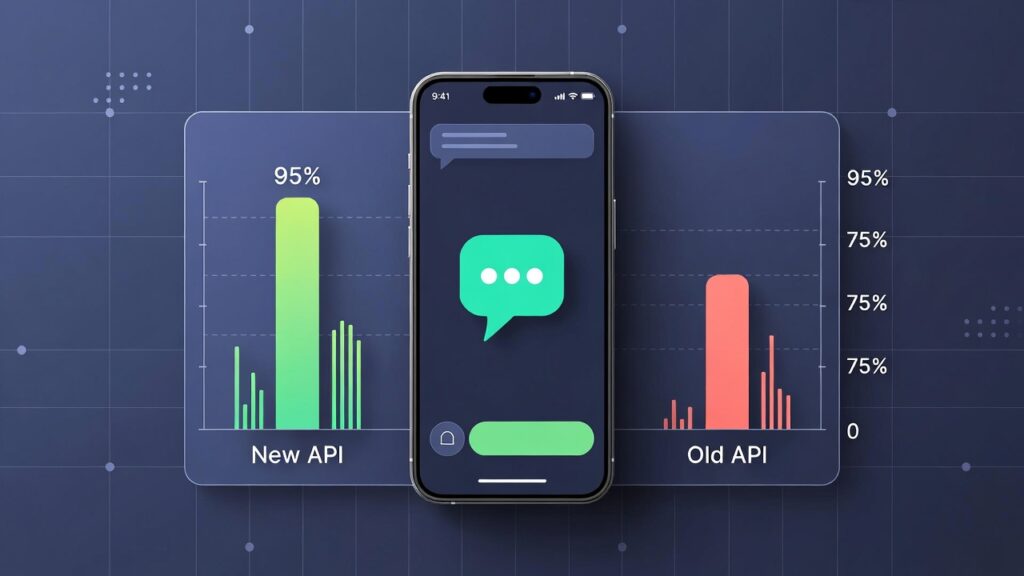
Here’s how I’d summarize it:
With 5SIM:
- works, but unpredictable
- requires handling edge cases
- success rate varies
With HeroSMS:
- predictable behavior
- higher first-attempt success
- simpler integration logic
The hidden cost of unreliable services
This is something most people underestimate.
Cheap services look attractive.
But the real cost includes:
- failed requests
- wasted API calls
- development time
- debugging complexity
In my case, the “cheaper” option actually cost more – in time and infrastructure.
When HeroSMS made the biggest difference
The biggest improvements showed up in:
- US-based SaaS registrations
- stricter verification systems
- time-sensitive workflows
Basically – any scenario where failure isn’t acceptable.
One important thing I learned
No SMS activate service is perfect.
Even with HeroSMS, you still need:
- proper IP setup
- realistic usage patterns
- basic retry logic
Because verification today is not just about the number.
It’s about:
- number quality
- IP reputation
- behavior signals
Final thoughts
If you’re a developer working with SMS verification APIs, here’s my honest takeaway:
The service you choose directly affects your system architecture.
Bad service → complex system
Good service → simple system
I started with 5SIM because it was easy.
I switched to HeroSMS because it worked.
And in the end, that’s what matters.
Not features. Not price.
Just whether your system runs without breaking.